Frequently Asked Questions
What is a body recomposition?
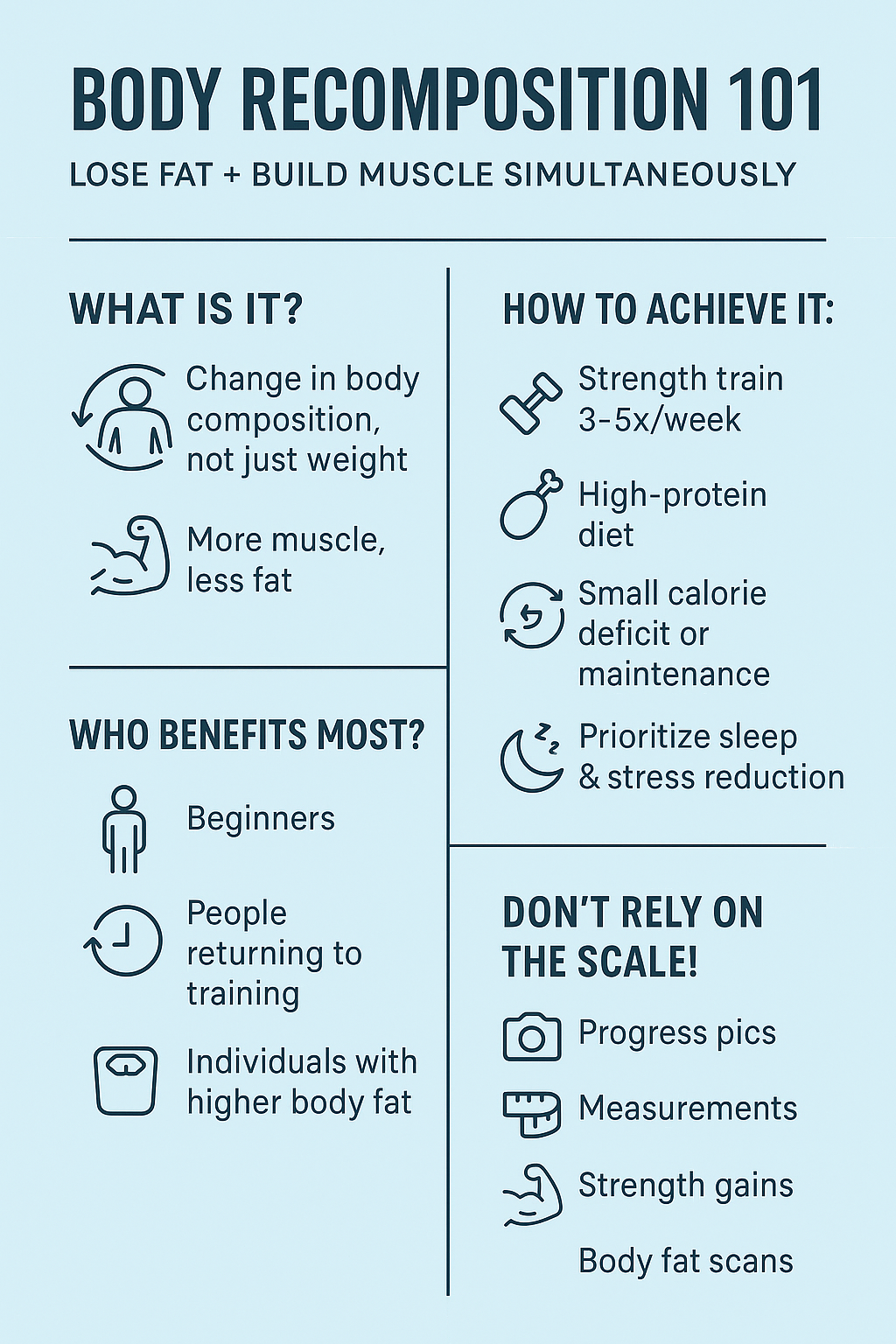
Body recomposition is the process of simultaneously losing fat and gaining muscle through a combination of strength training and proper nutrition strategies. This approach focuses on transforming body composition rather than just weight loss.
What does body recomposition mean?
Body recomposition refers to the process of simultaneously losing fat and gaining muscle through targeted strength training and nutrition strategies, ultimately leading to a healthier body composition and improved physical appearance.
How to do a body recomposition?
To achieve body recomposition, focus on a balanced approach of strength training to build muscle and a tailored nutrition plan to promote fat loss, while tracking your progress to ensure optimal results.
How to achieve body recomposition?
Achieving body recomposition involves a strategic combination of strength training and proper nutrition. Focus on progressive weightlifting to build muscle while maintaining a caloric deficit or balance to promote fat loss.
How does body recomposition work?
Body recomposition works by simultaneously reducing body fat and increasing muscle mass through a combination of strength training and proper nutrition. This process involves creating a calorie deficit for fat loss while ensuring adequate protein intake to support muscle growth.
What are the steps for body recomposition?
The steps for body recomposition include establishing a balanced strength training routine, following a tailored nutrition plan that supports muscle gain while promoting fat loss, and consistently tracking your progress to make necessary adjustments.
How to track body recomposition progress?
Tracking body recomposition progress involves monitoring changes in body composition metrics, such as body fat percentage, muscle mass, and measurements of key areas. Regularly taking progress photos and assessing strength gains can also provide valuable insights into your transformation.
What exercises support body recomposition goals?
Exercises that support body recomposition goals include strength training movements like squats, deadlifts, and bench presses, as well as high-intensity interval training (HIIT) to enhance fat loss while building muscle.
How important is nutrition for body recomposition?
Nutrition is crucial for body recomposition. It provides the necessary nutrients to support muscle growth while facilitating fat loss, ensuring optimal performance and recovery during strength training. Proper nutrition is the foundation for achieving desired body composition goals.
What role does strength training play?
The role of strength training is crucial in body recomposition as it helps build muscle mass while promoting fat loss. This dual effect enhances metabolism, improves body composition, and contributes to overall health and fitness.
Can body recomposition be achieved without supplements?
Body recomposition can indeed be achieved without supplements. By focusing on a balanced diet, strength training, and proper nutrition, individuals can effectively lose fat and gain muscle simultaneously.
What is the timeline for body recomposition?
The timeline for body recomposition varies based on individual factors such as starting fitness level, diet adherence, and training consistency. Generally, noticeable changes can occur within 8 to 12 weeks with a dedicated approach.
How to maintain muscle during body recomposition?
Maintaining muscle during body recomposition involves a combination of consistent strength training, adequate protein intake, and proper recovery. Focus on progressive overload in your workouts while ensuring your nutrition supports muscle preservation.
What are common mistakes in body recomposition?
Common mistakes in body recomposition include neglecting strength training, underestimating calorie intake, not tracking progress, and skipping proper nutrition. These errors can hinder fat loss and muscle gain, making it essential to follow a balanced approach.
How to adjust diet for body recomposition?
Adjusting your diet for body recomposition involves focusing on a balanced intake of protein, healthy fats, and complex carbohydrates while maintaining a slight caloric deficit. Prioritize high-quality foods to support muscle growth and fat loss effectively.
What is the best protein intake for recomposition?
The best protein intake for body recomposition is typically around 1.6 to 2.2 grams of protein per kilogram of body weight daily. This range supports muscle growth while aiding in fat loss when combined with strength training and proper nutrition.
How does hydration affect body recomposition?
Hydration significantly affects body recomposition by optimizing metabolic processes, enhancing muscle recovery, and supporting fat loss. Proper hydration helps maintain performance during strength training and aids in nutrient absorption, ultimately promoting effective recomposition results.
What are the benefits of body recomposition?
The benefits of body recomposition include improved body composition through simultaneous fat loss and muscle gain, enhanced metabolic health, increased strength and endurance, and a boost in overall confidence and well-being.
How to set realistic body recomposition goals?
Setting realistic body recomposition goals involves assessing your current fitness level, defining specific, measurable targets, and considering a sustainable timeline. Focus on gradual changes, such as losing 1-2 pounds of fat per week while gaining strength through consistent training and nutrition.
What is the impact of cardio on recomposition?
The impact of cardio on recomposition is significant as it helps burn calories and improve cardiovascular health, aiding in fat loss while preserving muscle mass when combined with strength training and proper nutrition.
How to overcome plateaus in body recomposition?
Overcoming plateaus in body recomposition requires adjusting your training and nutrition strategies. Incorporate variations in your strength training routine, increase workout intensity, and reassess your caloric intake to stimulate progress.
What is the difference between fat loss and recomposition?
The difference between fat loss and recomposition lies in their goals: fat loss focuses solely on reducing body fat, while recomposition aims to simultaneously decrease fat and increase muscle mass, resulting in a more toned physique.
How to balance calories for body recomposition?
Balancing calories for body recomposition involves creating a slight caloric deficit to promote fat loss while ensuring adequate protein intake to support muscle gain. Focus on strength training and nutrient-dense foods to achieve this balance effectively.
What mindset is needed for successful recomposition?
The mindset needed for successful recomposition involves patience, consistency, and a growth-oriented attitude. Embracing challenges, staying committed to your goals, and being open to learning from setbacks are essential for achieving lasting results.
How to incorporate rest days in recomposition?
Incorporating rest days in body recomposition is essential for recovery and muscle growth. Schedule at least one to two rest days per week, allowing your body to repair and adapt, which ultimately enhances your strength training and nutritional efforts.
What are the signs of effective body recomposition?
The signs of effective body recomposition include noticeable fat loss, increased muscle definition, improved strength and endurance, enhanced energy levels, and changes in body measurements, all indicating a successful balance between fat loss and muscle gain.
How to create a body recomposition workout plan?
Creating a body recomposition workout plan involves incorporating strength training, progressive overload, and a balanced mix of compound and isolation exercises. Focus on training each muscle group 2-3 times a week while ensuring proper nutrition and recovery.
What foods should be avoided during recomposition?
Foods that should be avoided during recomposition include processed sugars, refined carbohydrates, and high-fat junk foods, as they can hinder fat loss and muscle gain. Focus on whole, nutrient-dense foods instead for optimal results.
How to measure body composition changes accurately?
Accurately measuring body composition changes involves using methods such as dual-energy X-ray absorptiometry (DEXA), bioelectrical impedance analysis (BIA), or skinfold calipers. Regular tracking through these techniques provides insights into fat loss and muscle gain over time.
What is the role of recovery in recomposition?
The role of recovery in recomposition is crucial as it allows the body to repair and grow muscle, optimize fat loss, and prevent injury. Adequate recovery enhances performance and supports long-term progress in achieving body recomposition goals.