Frequently Asked Questions
What should my macronutrients be to gain muscle?
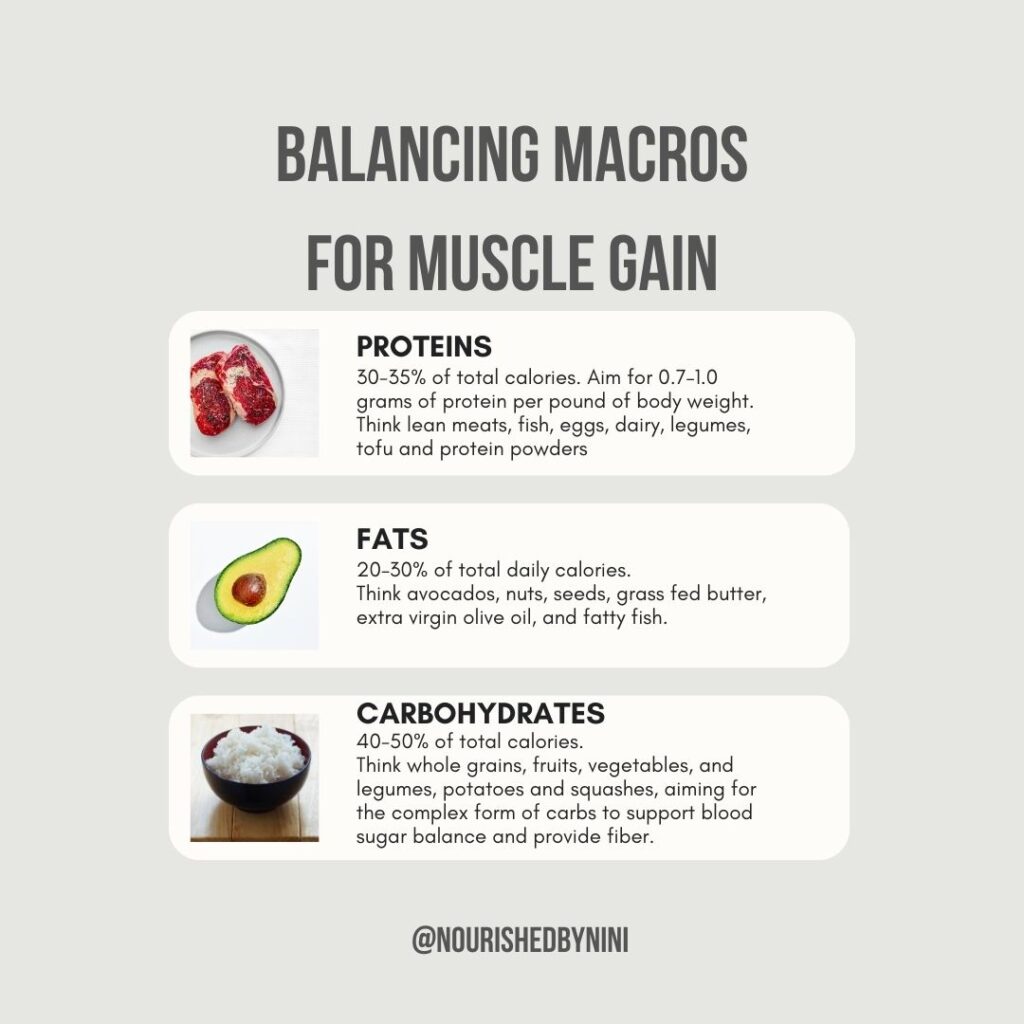
The macronutrient ratio for muscle gain typically consists of approximately 30% protein, 50% carbohydrates, and 20% fats. Adjust these percentages based on your individual needs and activity levels for optimal results.
How to work out macros for muscle gain?
To work out macros for muscle gain, calculate your daily caloric needs, then allocate approximately 30% of calories to protein, 50% to carbohydrates, and 20% to fats, adjusting based on your individual progress and goals.
How to calculate macros for muscle gain?
Calculating macros for muscle gain involves determining your daily caloric needs and then distributing those calories among proteins, carbohydrates, and fats. Aim for a ratio of approximately 30% protein, 50% carbohydrates, and 20% fats to support muscle growth effectively.
How to calculate my macronutrients for muscle gain?
Calculating your macronutrients for muscle gain involves determining your daily caloric needs and then allocating those calories among proteins, carbohydrates, and fats. Aim for a ratio of approximately 30% protein, 50% carbohydrates, and 20% fats to support muscle growth effectively.
How to calculate your macros for muscle gain?
Calculating your macros for muscle gain involves determining your daily caloric needs and dividing them into macronutrients: proteins, carbohydrates, and fats. Aim for approximately 30% protein, 50% carbohydrates, and 20% fats to support muscle growth effectively.
How to track macros for muscle gain?
Tracking macros for muscle gain involves calculating your daily protein, carbohydrate, and fat needs based on your fitness goals. Use a food diary or app to log your meals, ensuring you meet your specific macro ratios to support muscle growth effectively.
How many macronutrients should I eat to gain muscle and stay lean?
The ideal macronutrient distribution for gaining muscle while staying lean typically includes 30% protein, 50% carbohydrates, and 20% fats. Adjust these ratios based on individual needs and activity levels for optimal results.
How to count macros for muscle gain?
Counting macros for muscle gain involves determining your daily caloric needs and then allocating those calories into specific macronutrient ratios: typically 30% protein, 50% carbohydrates, and 20% fats, adjusted based on your individual goals and activity level.
What should my macros be for muscle gain?
The ideal macronutrient ratio for muscle gain typically consists of 30-35% protein, 45-55% carbohydrates, and 20-25% fats. Adjust these ratios based on your individual needs, activity level, and fitness goals for optimal results.
What macros should I eat to gain muscle?
To gain muscle, you should focus on a balanced intake of macronutrients: approximately 30% protein, 50% carbohydrates, and 20% healthy fats. This ratio supports muscle repair, energy for workouts, and overall health.
What is the ideal protein intake for muscle gain?
The ideal protein intake for muscle gain is typically around 1.6 to 2.2 grams of protein per kilogram of body weight daily. This range supports muscle repair and growth when combined with a balanced diet and strength training.
How do carbs support muscle growth?
Carbohydrates support muscle growth by providing the necessary energy for intense workouts and aiding in recovery. They replenish glycogen stores, which helps sustain performance and promotes muscle repair, ultimately enhancing muscle gains.
What fats are best for muscle gain?
The best fats for muscle gain include healthy sources like avocados, nuts, seeds, and olive oil. These fats provide essential fatty acids and support hormone production, which are crucial for muscle growth and recovery.
How to adjust macros for different workouts?
Adjusting macros for different workouts involves tailoring your protein, carbohydrate, and fat intake based on workout intensity and duration. For strength training, increase protein and carbs for recovery, while endurance workouts may require higher carbs for energy.
What is the role of protein timing?
The role of protein timing is crucial for optimizing muscle gain. Consuming protein at strategic times, particularly post-workout, enhances muscle recovery and growth by providing the necessary amino acids when your body needs them most.
How to balance macros for muscle recovery?
Balancing macros for muscle recovery involves prioritizing protein for muscle repair, carbohydrates for replenishing glycogen stores, and healthy fats for overall health. Aim for a post-workout meal with a 3:1 ratio of carbs to protein to optimize recovery.
What are common macro mistakes for muscle gain?
Common macro mistakes for muscle gain include neglecting protein intake, consuming excessive carbohydrates without considering timing, and not incorporating healthy fats. Balancing these macronutrients is crucial for optimizing muscle growth and recovery.
How to meal prep for muscle gain?
Meal prepping for muscle gain involves planning and preparing balanced meals rich in proteins, carbohydrates, and healthy fats. Focus on portioning out meals that align with your macronutrient goals, ensuring consistent intake to support muscle growth.
What supplements aid in macronutrient balance?
Supplements that aid in macronutrient balance include protein powders, which help meet protein needs; omega-3 fatty acids for healthy fats; and branched-chain amino acids (BCAAs) to support muscle recovery and growth.
How to adjust macros during a bulk?
Adjusting macros during a bulk involves increasing your caloric intake primarily through carbohydrates and proteins while monitoring fat intake. Aim for a ratio of approximately 40% carbs, 30% protein, and 30% fats to support muscle growth effectively.
What is the impact of hydration on macros?
The impact of hydration on macronutrients is significant. Proper hydration enhances nutrient absorption, aids digestion, and supports metabolic processes, ensuring that proteins, carbohydrates, and fats are effectively utilized for muscle gain and overall performance.
How to calculate macros for strength training?
Calculating macros for strength training involves determining your daily caloric needs and then distributing those calories among proteins, carbohydrates, and fats. Aim for approximately 1.2 to 2.2 grams of protein per kilogram of body weight, with carbs and fats adjusted based on your energy expenditure and personal goals.
What foods provide optimal muscle gain macros?
Optimal muscle gain macros can be achieved through foods rich in protein, healthy fats, and complex carbohydrates. Focus on lean meats, fish, eggs, nuts, whole grains, and legumes to effectively support muscle growth and recovery.
How to track macros effectively for muscle gain?
Tracking macros effectively for muscle gain involves calculating your daily protein, carbohydrate, and fat needs, then using a food diary or app to log your intake. Consistently monitor your progress and adjust as needed to meet your goals.
What is the best macro ratio for muscle gain?
The best macro ratio for muscle gain typically consists of approximately 40% carbohydrates, 30% protein, and 30% fats. This balance supports muscle recovery, growth, and overall energy levels during training.
How to modify macros for cutting phases?
Modifying macros for cutting phases involves reducing overall caloric intake while adjusting protein, carbohydrate, and fat ratios. Aim for higher protein to preserve muscle mass, lower carbs to promote fat loss, and moderate fats for energy.
What are the signs of improper macro intake?
The signs of improper macro intake include fatigue, muscle loss, difficulty gaining strength, and poor recovery. Additionally, an imbalance may lead to cravings, digestive issues, and fluctuations in energy levels.
How to incorporate snacks into muscle gain macros?
Incorporating snacks into muscle gain macros involves choosing nutrient-dense options that complement your protein, carbohydrate, and fat goals. Aim for balanced snacks like Greek yogurt with fruit or nut butter on whole-grain toast to support muscle growth effectively.
What is the importance of fiber in macros?
The importance of fiber in macros lies in its role in digestion and overall health. Fiber aids in nutrient absorption, promotes satiety, and helps regulate blood sugar levels, making it essential for effective muscle gain and balanced nutrition.
How to evaluate macro effectiveness for muscle growth?
Evaluating macro effectiveness for muscle growth involves tracking your protein, carbohydrate, and fat intake against your progress in muscle gain. Regularly assess your body composition, strength levels, and energy during workouts to ensure your macros support your goals.