
For years, many Americans have based their diets on packaged, convenience foods loaded with added sugars, refined carbs, industrial additives, and artificial ingredients. These highly processed foods now make up a massive share of the calories we consume and they are strongly linked to chronic disease, obesity, and poor metabolic health.
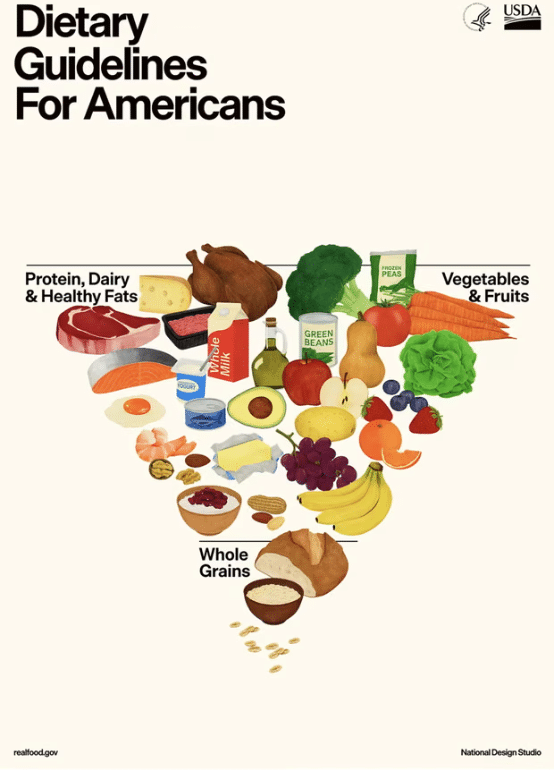
The new guidelines push back on that trend by encouraging everyone to prioritize foods like:
- Fresh vegetables and fruits
- Whole grains
- High-quality proteins (including lean meats, seafood, eggs, beans, and dairy)
- Healthy fats from whole foods like nuts, seeds, olives, and avocados
- Minimally processed dairy and natural fats
- Water and unsweetened beverages
This “real food first” philosophy feels right on point with what I’ve been telling clients for years: your body thrives on food that looks like food, not a chemistry experiment.
A Shift That Can Align With Long-Term Health
Limiting highly processed foods and added sugars. That means stepping back from:
- Packaged snacks like chips, cookies, and candy
- Sugar-sweetened drinks and energy drinks
- Ready-to-eat meals with long ingredient lists
- Foods with artificial flavors, dyes, and preservatives
Whether you’re meal prepping for the week, feeding your family, or guiding clients and patients, here are a few practical takeaways from the new guidelines:
- Make whole foods the centerpiece of every meal.
- Reduce reliance on packaged and ultra-processed meals cook from scratch more often.
- Focus on colorful produce, quality proteins, and healthy fats that support satiety and metabolic health.
- Read ingredient lists if there are a dozen unpronounceable ingredients, think twice.
Nini’s Concerns With The New Dietary Guidelines
While I’m encouraged by the overall shift toward whole foods, I do have concerns about how saturated fat is represented in the new food pyramid. Saturated fat isn’t something to fear, but over-emphasizing it can unintentionally minimize the importance of healthier, unsaturated fats. I’d love to see more focus on fats from whole-food sources like avocados, nuts, seeds, olives, and olive oil, which are linked to improved heart health and reduced inflammation. In my practice, I encourage balance, enjoying saturated fats in moderation while prioritizing nutrient-dense, plant-based fats that support long-term health.
Do you enjoy learning about macronutrients, superfoods and health tips?
Subscribe to our newsletter and expert insights on fitness, nutrition, and overall wellness, delivered straight to your inbox every month.
How RxFit Meal Prep Supports the Dietary Guidelines?
Understanding the dietary guidelines is one thing — implementing them consistently is another. That’s where RxFit Meal Prep Service comes in.
Our chef-crafted meals are designed around the same real-food principles outlined in the dietary guidelines: quality proteins, fiber-rich vegetables, healthy fats, and minimal processing. Each meal is nutritionally balanced to support energy, digestion, metabolic health, and recovery — without the guesswork.
If you want to follow the dietary guidelines without spending hours planning, shopping, and cooking, RxFit Meal Prep makes it simple. Real food, balanced nutrition, and meals that actually support your goals.

Want to learn more about 1:1 coaching?
Book a free consultation call with our in-house Functional Nutritionist, Nini, to get personalized advice on meal planning, macro coaching, and more.
or send email to nini@rxfitatx.com
